
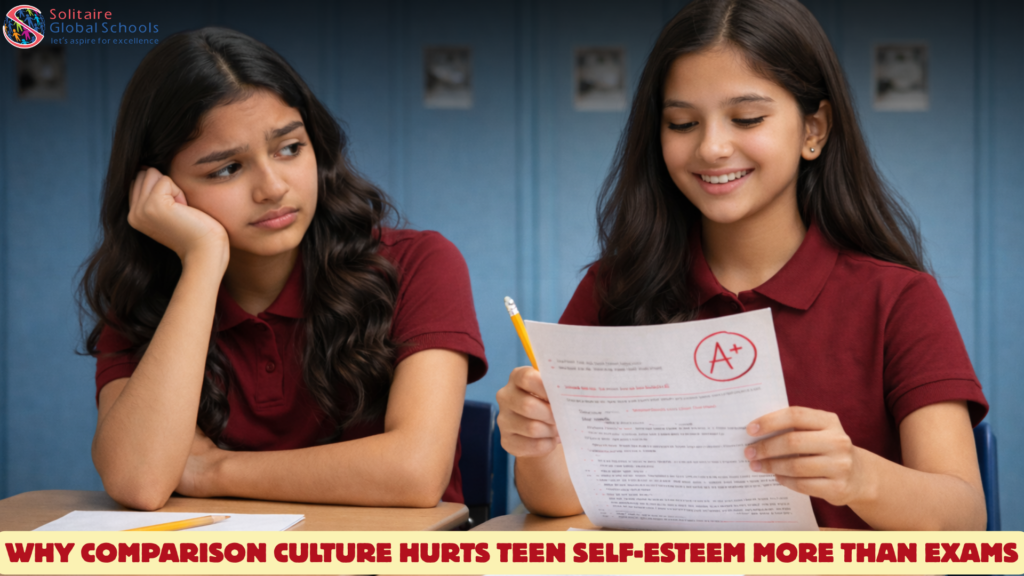
In India, academic performance is often seen as the ultimate benchmark of success. Parents, relatives, and even peers frequently compare children based on exam results, board exam scores, or achievements in extracurricular activities. While exams like CBSE Class 10 and 12 board exams are undoubtedly challenging, studies show that constant comparison with others can impact teen self-esteem far more than the exams themselves.
The Pressure of Comparison in Indian Households
Indian parents naturally want their children to succeed, but this often manifests as comparisons with cousins, classmates, or friends. Common statements like:
- “Your cousin scored 95%, why didn’t you?”
- “Look at Rohan, he is already excelling in coding and robotics at 15.”
- “Your friend got into an IIT, shouldn’t you aim for the same?”
may seem motivating, but they can inadvertently make teens feel inadequate, anxious, and under constant pressure to meet expectations that are not their own.
Unlike exams, which are temporary assessments, comparison is constant and pervasive. While a failed test is an isolated event with opportunities to improve, comparison creates a lingering sense of never being “good enough.” Teenagers internalize these comparisons, leading to reduced confidence, anxiety, and even withdrawal from activities they once enjoyed.
How Comparison Affects Teen Mental Health
Psychologists note that teens subjected to frequent comparisons often experience:
- Low self-esteem and self-doubt
- Anxiety and exam-related stress
- Reduced motivation due to fear of failure
- Difficulty identifying their own strengths
This is particularly concerning in Indian homes where academic excellence is closely tied to a child’s perceived worth.
Case Study: Priya from Hyderabad
Priya, a 15-year-old student in Hyderabad, consistently scored above 85% in her school exams. On the surface, she was a high achiever. However, her parents frequently compared her to her cousin, who excelled academically and in extracurricular activities like debate and music. Despite Priya’s accomplishments, she began feeling “average” and hesitant to participate in competitions, fearing she would never measure up.
The constant comparison affected her mental health and classroom performance. She developed anxiety before tests and avoided social interactions, worried that others would judge her for not being as accomplished.
It was only when her teachers and a school counselor helped her set personal goals and focus on self-improvement rather than peer comparison that Priya regained her confidence. By recognizing her unique strengths in academics and arts, she learned to value her own progress, not just how she measured up to others.
How Schools Can Help Teens Build Self-Esteem
- Promote Individual Goals: Encourage students to compete with themselves, celebrating personal achievements in academics, sports, and arts.
- Focus on Strengths, Not Just Scores: Recognize students’ talents and interests beyond traditional subjects, such as coding, robotics, or creative writing.
- Parental Guidance Workshops: Educate parents on teen mental health, the negative impact of comparison, and ways to encourage self-confidence.
- Counseling and Mentorship: Provide access to school counselors to help students cope with exam stress, set realistic goals, and build self-esteem.
Tips for Parents
- Praise effort, not just results or board exam scores.
- Avoid comparing your child with peers or relatives.
- Encourage hobbies and individual interests.
- Frame struggles and failures as learning opportunities for personal growth.
Conclusion
In India, comparison culture often overshadows exam stress, leaving teens questioning their self-worth. Schools like Solitaire Global Schools emphasize
self-confidence, personal growth, and mental well-being, helping students thrive without the pressure of constant comparison. By prioritizing self-esteem development over peer competition, parents and educators can empower teens to pursue success on their own terms and develop into confident, well-rounded individuals.